




CRE deals in Africa: the inside story of Improvon’s CRM

Improvon’s East Africa team, focused on the fast-growing industrial market, overcame deal making frustrations and blockers by implementing a custom BI-focused, CRM system. With Africa-specific, data asset management, sentiment analytics, and dashboards for real-time pipelines the team is empowered to accelerate sales, resource better, support the team, and scale operations.

Commercial real estate CRM: from flying blind to deal-making dominance

Picture this: You’re at the helm of a dynamic property developer like Improvon, carving out modern industrial parks across East Africa – think Kenya’s bustling logistics hubs and build-to-suit warehouses. But, operationally, it feel like you’re back in the 1980s. Your team is chasing leads in the field, juggling spreadsheets that grow more unwieldy by the deal. You’re struggling to spot patterns in a pipeline that’s more guesswork than gospel, and you’re struggling to understand team operations/coalface progress. You and your shareholders crave real-time insights to forecast demand, allocate resources, and refine strategies. Yet, despite this, reporting is a grind, buried under mounting data volumes.

Sound familiar? In the African commercial real estate (CRE) landscape, where new developments and major leases demand precision, “flying blind” isn’t just a metaphor – it’s a business killer.

This was Improvon’s reality in their Impact division, focused on Kenya. And the traditional solutions – hiring more hands or piling on Excel tabs – felt like adding more layers of Band Aid.

So in true African style, a plan was made.

Custom commercial property CRM

Enter our collaboration: a bespoke CRM fused with BI, built from the ground up to tackle this CRE niche’s unique pains. Here’s the story of why we did it, what it does, and how it’s already reshaping their game – proving that smart software isn’t a luxury; it’s the edge that take you from fog to opportunity.

The rationale: why generic tools fall flat in African CRE’s complex world

The tool of choice required lots of hard thinking – every decision had major tradeoffs.

Improvon needed an off-the-shelf CRM like Salesforce or HubSpot, merged with standalone BI tool like Tableau or PowerBI. These enterprise-level tools are great for generic sales funnels, but CRE? It’s a beast of its own. Deals here in African aren’t simple – they intertwine leads, contacts, organisations, properties, leases, and interactions in a web that’s and riddled with African market nuances. And its make more complex with poorly structured and incomplete data.

The math was stark. Taking a generic CRMs and customising itfor CRE would rack up prohibitive costs: from the once-off tinkering, through to the monthly licensing fee, and on to the ongoing maintenance that drains resources. Off-the-shelf options? Non-existent for a “made-for-CRE” fusion that handles everything from deal pipelines to analytics without forcing users into clunky workflows. Low-code alternatives promised speed but hit walls on complexity, risking Improvon painting themself into a corner.

We analyzed four paths:

🤝 Renting off the shelf (normally the best and most recommended choice, but this was impossible, because no perfect fit existed),
🏗️ Traditional SaaS in-house builds (eye-watering costs – the seemingly simple PipeDrive solution cost $90M),
🛠️ Low-code (fast but limited scalability), and
✨ A risky bet on AI-driven SaaS development, focused on solid languages and frameworks (lower cost, faster – but unchartered territory)

Improvon chose the last option in early 2025. With a keen eye on cost, we rolled the dice with a then-unknown AI quantity. We attempted to minimise risk by selecting a stable platform and tech stack. to accelerate development, Why? It aligned with Improvon’s goal: a system that can grow with them, with a mindset of treating data as an asset (met by focusing on managing data quality at entry). We invested over 150 person-hours upfront in business analysis, requirements, and a proof-of-concept applet to de-risk it all. The maxim? “It’s cheaper to throw away ideas than design, than code.” This wasn’t about shiny tech – it was about taking hard-won lessons, and solving real CRE pain points: lost deals from forgotten follow-ups, blind spots in conversion funnels, precious time lost to repetitively wrangling data, and the inability to do resourcing from actual data.

For CRE pros reading this, the lesson is clear. In a sector where data volumes will only grow, and reporting demands intensify, choosing the “faster horse” option only delays the inevitable pain. Custom software, when grounded in deep domain IP, flips the script – lowering risks by making the invisible visible, and turning reactive hustling into proactive dominance.

The functionality: a CRE developments-tailored powerhouse

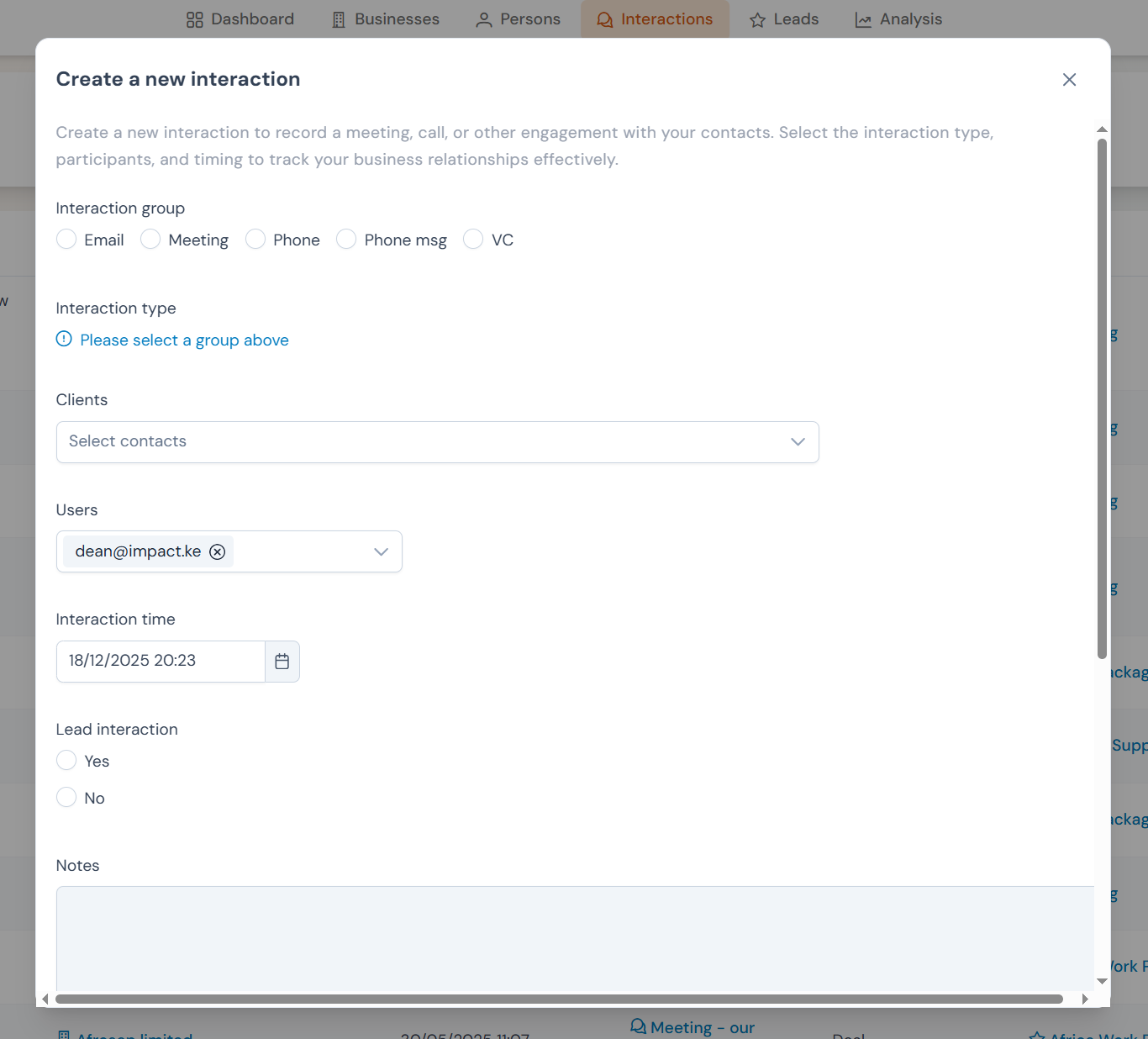
The cloud-hosted, Africa-specific, developer-niche-specific system is built to be simple to use, with a focus on data quality (using wizards, required fields, and data sections / next steps that only unlock if rules are satisfied).

Wizards commercial property CRM

Improvon now has all-in-one hub for managing the standard inter-related entities like leads, contacts, businesses, interactions and reminders. But the less obvious benefit? Manage can easily keep a finger on the business’s pulse (see image), and then sweat the data.

Commercial property database

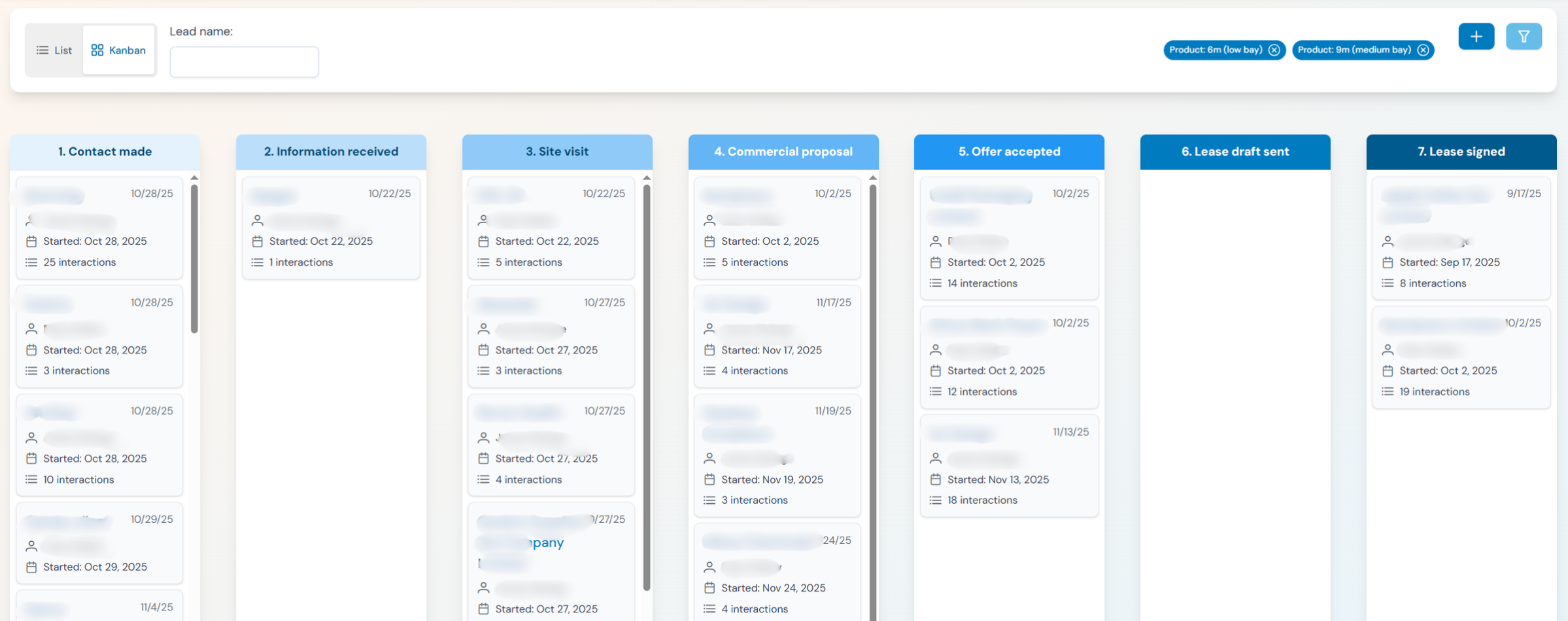
Deal management forms the system’s heartbeat. All deals are tracked – cradle to grave: from the sources of leads, the detailed lead requirements (GLA, asking rents, product types, occupation dates), through to all major step actions, and right to completion.

Custom commercial property CRM

The lead channels pinpoint sources – direct (e.g., referrals, canvassing) vs. indirect (brokers, CRES) – helping focus efforts and resources on what converts.
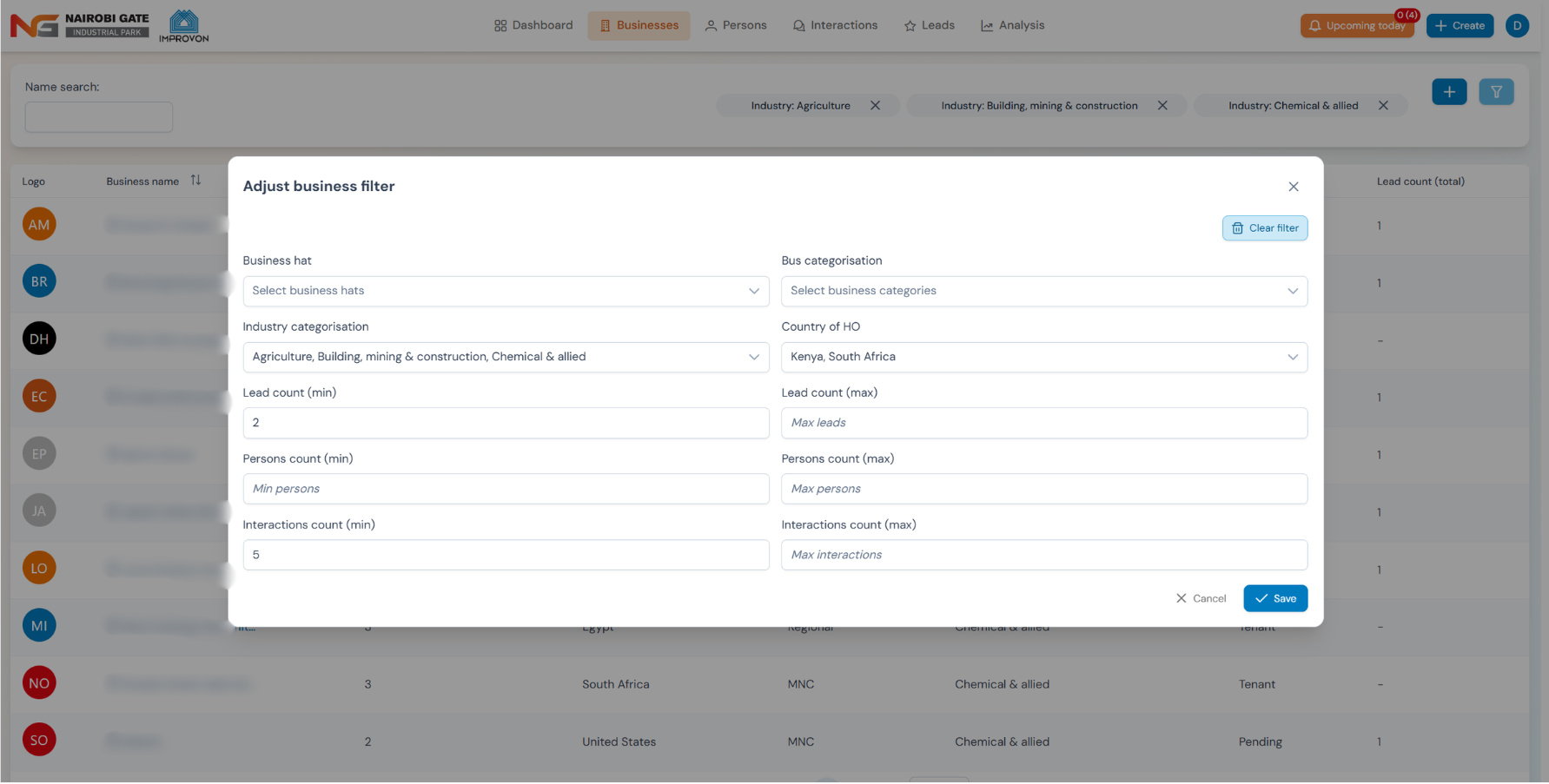
Every data entity was meticulously planned – weighing up friction now with future scalability. For example, businesses are categorised by type (local, regional, MNC), head office country, industries (from agriculture to logistics), and operational footprints.
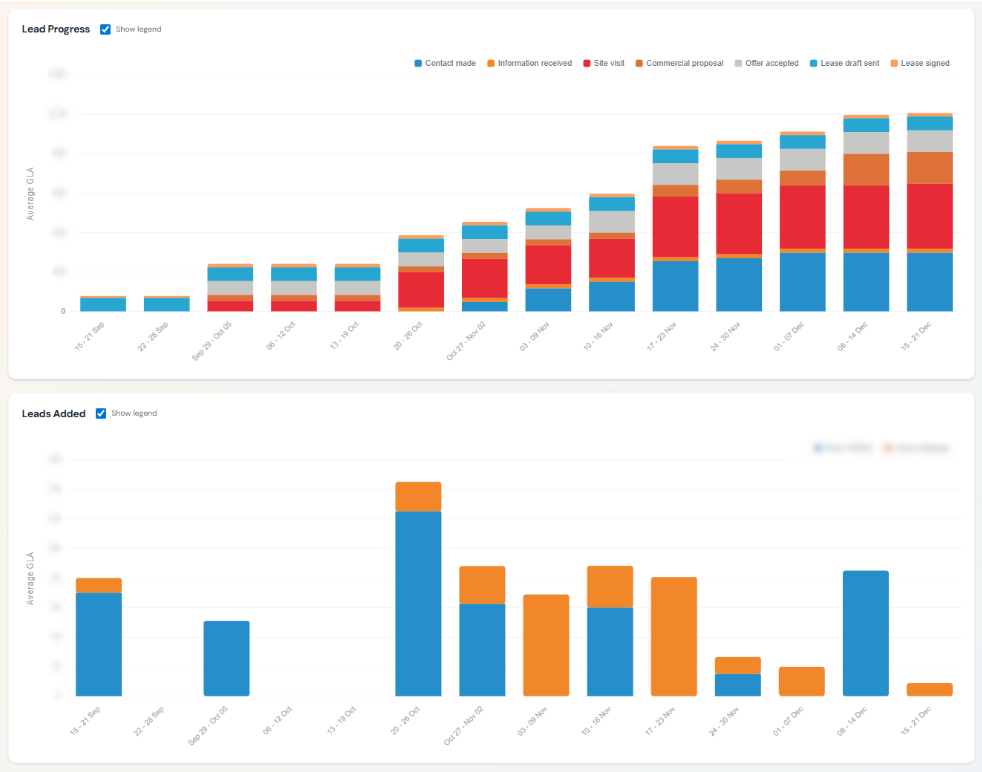
“Lazy mode” cuts frustration: Toggle it on, and advance stages without mandatory interactions – ideal for moving fast, without “too many clicks.” But for rigour, interactions tie to specific deal steps, capturing sentiment scores, and interaction quality (awkward chats score low; high-rapport ones soar). This builds a conversion funnel based on real data, not hunches – tracking site visits, proposals, offers accepted, and leases signed.

Analytics was Improvon’s biggest consideration.

CRE CRM

Simple sorts and entity filters enable quick scans.

South Africa commercial real estate CRM

However, sophisticated analytics was Improvon’s big prize. Unfortunately, conversational AI was not the silver bullet we hoped. Its unpredictable variations in answers, increased business risk.
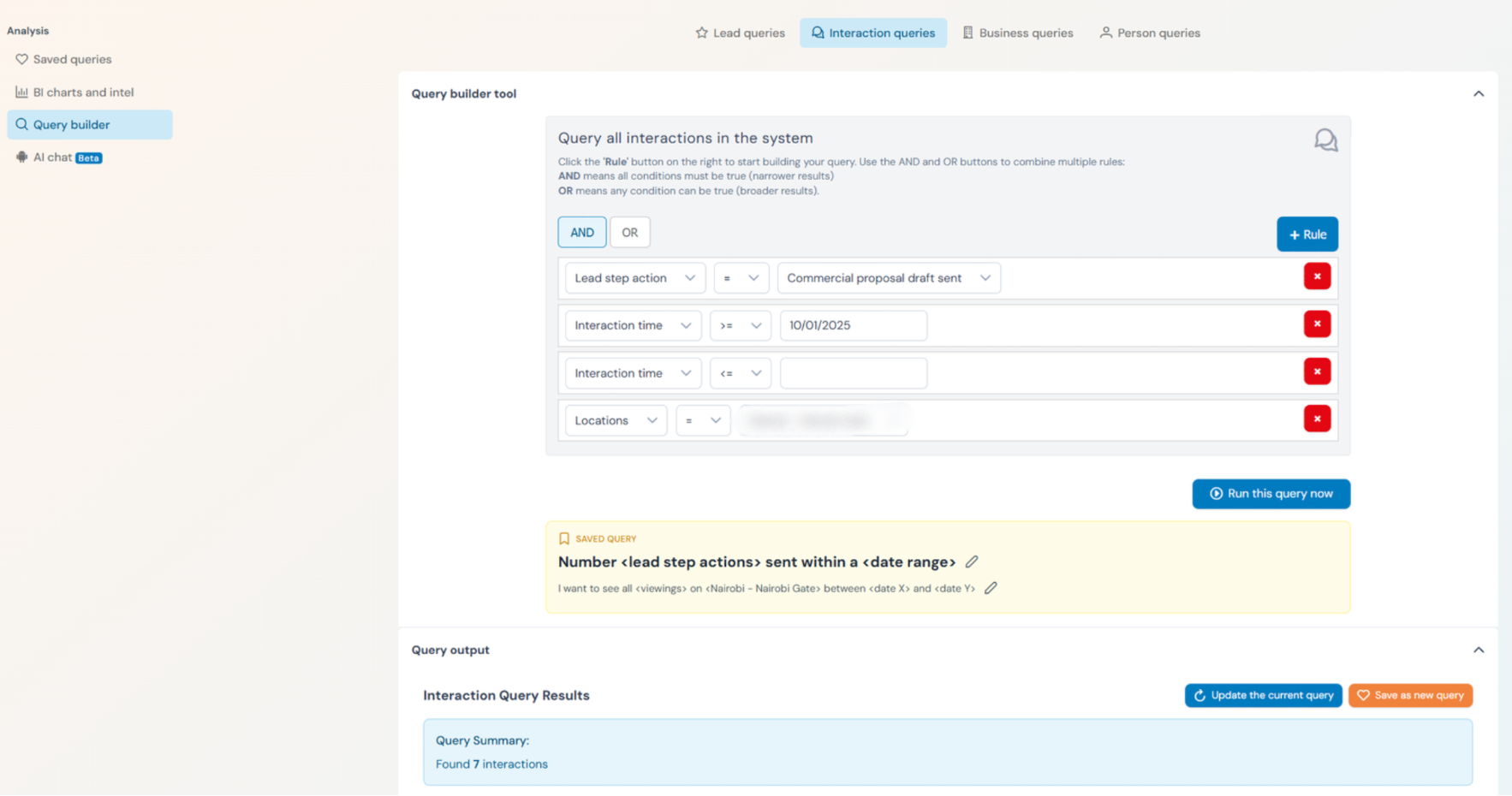
Instead, for advanced filters, handling cross-entity queries, we instead built a highly powerful, detailed engine. The benefit: a battery of ready-built queries, working like SQL – but with a human interface. To handle for query complexity, we empowered users with unique “and/or/not” logic.

Custom commercial real estate BI

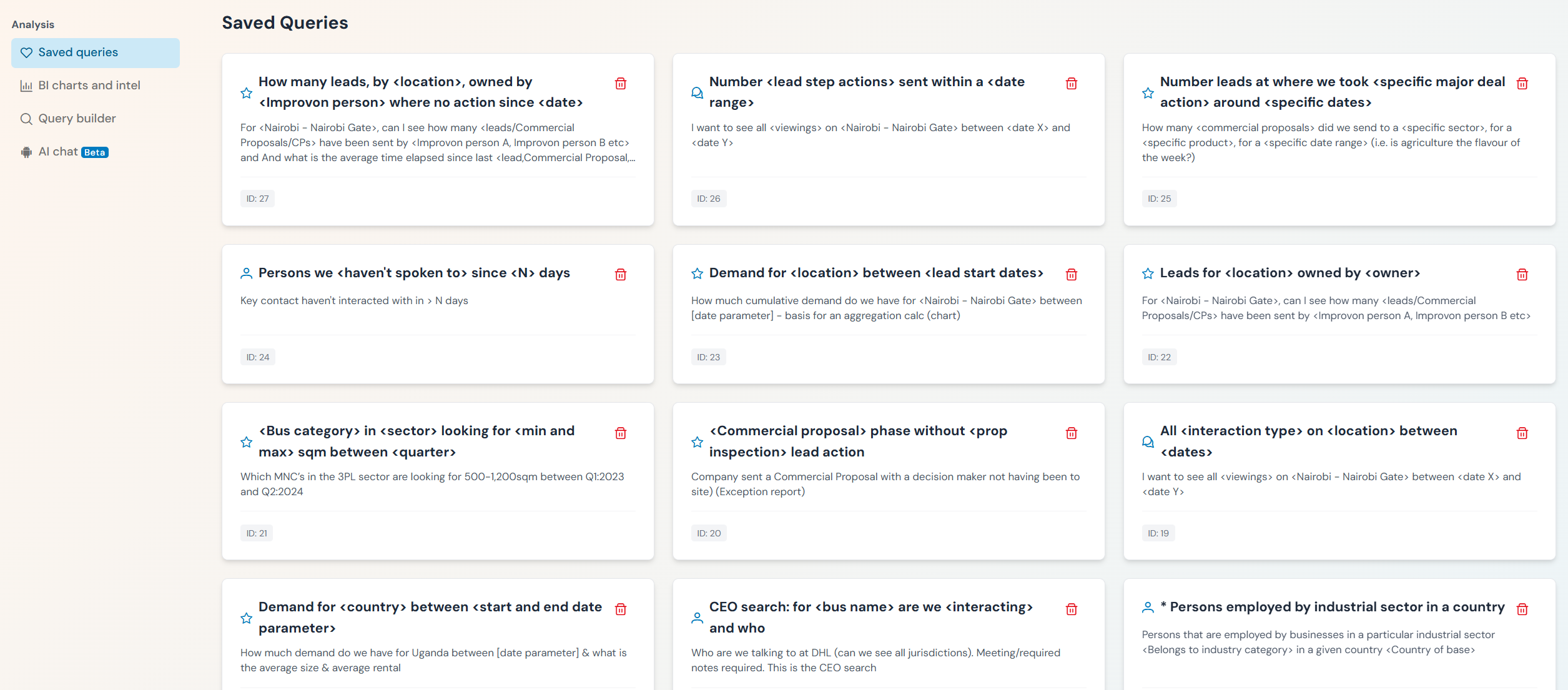
To enable quick answers in a boardroom environment, we built query “cards” (that are named and saved, and easily edited).

Commercial property business intelligence

Auto-reminders, emails, Kanban boards, and prevention kept things clean. Exclusions like org hierarchies or audit logs were pragmatic for MVP, ensuring 90% needs met without bloat.

High rigour at data capture assures low to no data debt, and future migrations (if off-the-shelf evolves) are low-pain. In essence, it’s not just software – it’s a sales accelerator, empowering teams to work smarter in the field while giving execs near-real-time pipelines to refine strategy.

The achievements: speed, savings, and scalability

Flash forward: we rolled out a solid MVP for a fraction of the price, covering 27% of the 600-odd defined features – with our analysis only missing Customs Controlled Areas (CCAs) aka Special Economic Zones (SEZs).
This deep analysis meant initial specs grew (fields ballooned from 31 to 140, objects from 5 to 11).
Monthly? On the back of solid architectural decisions and deep planning, hosting costs are less than $50 / month. Assurance, maintenance, and support is run on a transparent cost plus basis. Compared to traditional builds’ multimillion tabs or low-code’s scalability risks, this was a steal – AI sped development, deep analysis eliminated unknowns, and we worked backwards from BI requirements, baking the designs from day one.

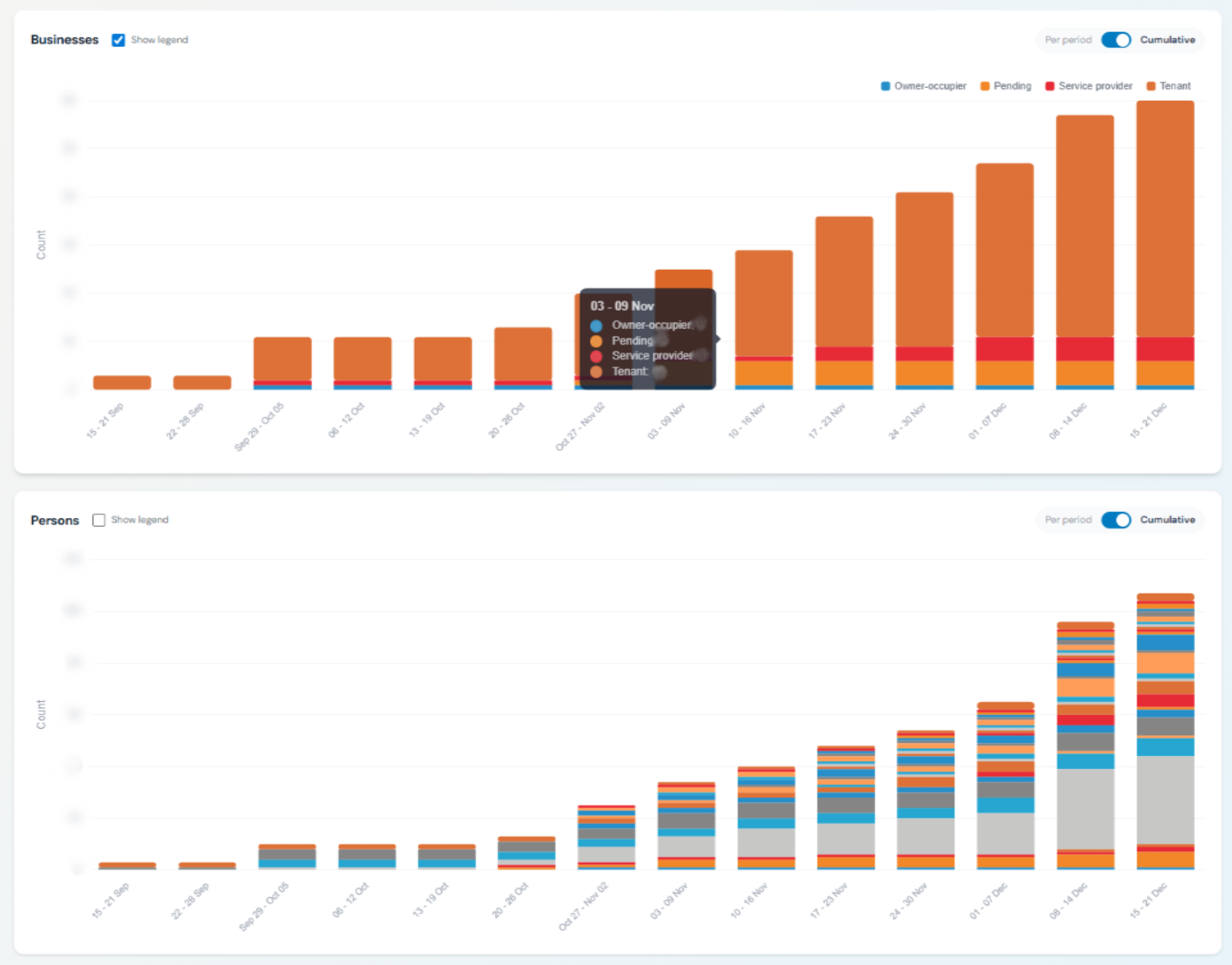
The real win? Improvon’s team now moves deals faster, with no leads slipping through cracks. Business intelligence flows: Sentiment tracking spots warming prospects; channel analysis hones marketing; dashboards project demand for resourcing. In Kenya’s competitive industrial space, this means quicker closes, better tenant matches, and data-driven expansions – translating to higher occupancy, reduced risk, and sharper negotiations. Risks like IP ownership? Clarified upfront – your data, your code, no resales to competitors. Overlap with our Gmaven SaaS to manage properties, units, leases and marketing? These can be integrated for downstream needs.

For CRE leaders, this project underscores a truth: Well-designed software doesn’t just solve problems – it creates advantage. Improvon isn’t flying blind anymore; they’re soaring with visibility that lowers risks, boosts efficiency, informs decisions, and unlocks revenue. In a market where data is gold, we’ve helped mine it responsibly, proving our commitment to being a force for good in CRE.

What’s your CRE blind spot? If manual processing or murky intel is holding you back, let’s explore how tailored tech can light the way.

About the author

Related posts

Industry Intel and News
AI Boosts Business: A Joe’s Journey

Over 40 and feeling the AI heat? Is it hype or hope? As a regular SA Joe with pretty good Excel and BA basics, I dove in to AI, tackling a real problem you likely wrestle with every day – moving raw data to useful output. Forget the 6 week old ways “black box”, I built a game-changer in 15 days. Join me as I share the wins, woes, and wisdom of my journey – proof you can too.

Denominator data South Africa
Industry Intel and News
Why Your SA Business is Flying Blind Without Denominator Data

In the fast-paced, hyper-competitive world of South African business, data without context is like scoring 50 marks without knowing it’s out of 200 – a recipe for poor decisions. Enter denominator data: a game-changing approach to geospatial insights that provides the missing “total” for your numbers, turning raw sales values (or risk, calls, etc.) into meaningful intel – steering action.

SA commercial property value
Industry Intel and News
Latest SA commercial property value

This is a key number in South African commercial real estate (CRE). After a lot of hard work, we are able to deliver a firm, defensible value to SA – relevant to businesses (who almost all operate out of CRE), policy makers and the industry itself.

Leave a Reply

Your email address will not be published. Required fields are marked *

Fill out this field
Fill out this field
Please enter a valid email address.
You need to agree with the terms to proceed