


Data’s Edge: Manufacturer Activates R600M Extra Sales

Data-driven decision-making is a buzzword. Here is a practical example. Using unique CRE data, a major South African manufacturer figured out their actual penetration, identified R600M in untapped office market revenues and picked up their customers were paying 33% more. Using this data, the business could plan a precise sales strategy, prioritising the best-returning segments.

SA business market analysis powered by unique CRE data

Imagine you’re the largest manufacturer of your product in the Southern Hemisphere. A powerhouse South African business, highly sophisticated, exporting your product all over the world – let’s call you Acme. Over decades you’ve built a great business supplying the property industry.

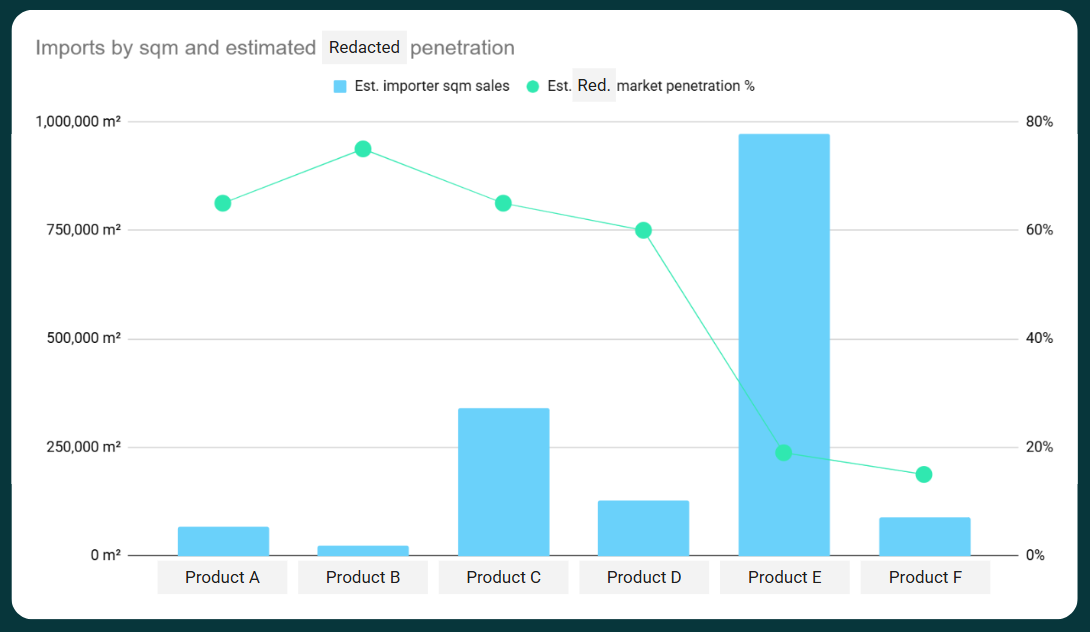
But something’s off. Through your detailed tracking of the reported SARB data, you see expensive, inferior imports flooding in, eating market share.
Despite time-consuming and expensive previous research projects, you are uncertain on your market penetration.
Finally, you lack a clear picture of the market: Who’s buying? Why are they choosing imports over local quality? And how much untapped opportunity is really out there? And this is after previous attempts at SA business market analysis.

This was Acme’s reality. Like many established players, they relied on intermediaries – distributors and contractors – to reach end customers. In this case, for the commercial real estate sector, it’s property funds and owner-occupiers.
But this model created opacity: no direct line to the buyers, limited insights into spending patterns or customer needs, uncertainty around profitability levers, and a nagging suspicion that something major, somewhere, was being missed.
Enter a data-led initiative that transformed guesswork into precision, uncovering a half a billon Rand annual opportunity, and paving the way for a doubling in sales for a specific niche.

Here’s the story of how the first phase unfolded. Data isn’t just numbers; it’s the key to competitive dominance.

The starting point: a large market shrouded in fog

Acme knew the South African office market was vast, but quantifying it? Tricky. Traditional estimates were based on opinions and subsets of the data.
Further, the devil is in the granular detail – covering nuances like vacancy rates, geographies and sub-markets, grades and related products, replacement cycles, and product wastage. Without a sense of the total size (or denominator), well-intentioned advisors focused on the wrong drivers of growth. Without reliable data, executives were thwarted in their efforts to articulate a strategy. As a result, previous expansion efforts had fizzled, resulting in scattered efforts that never landed wins.

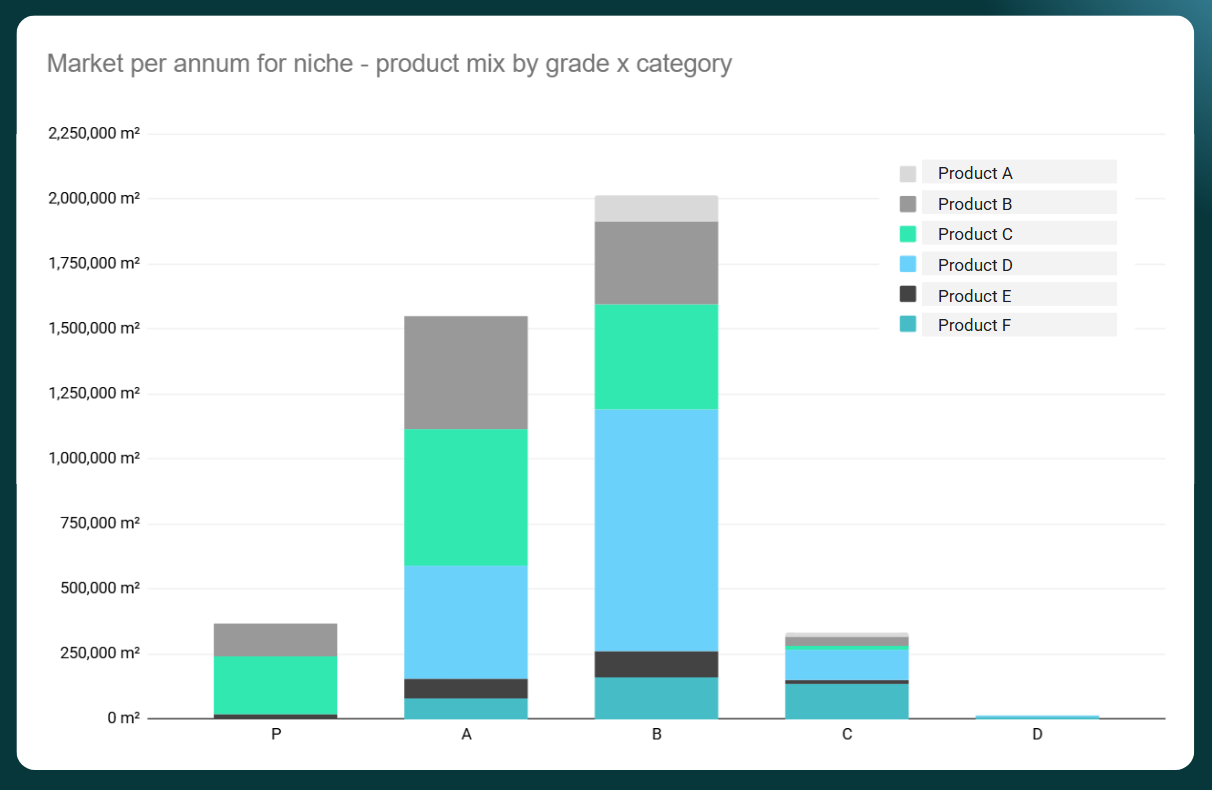
That’s where unique commercial real estate (CRE) data came in. Sourced from the country’s largest database of geolocated, granular, uniquely identified data, this wasn’t off-the-shelf intel. It was the kind of IP that reveals hidden gems: What is the annual industry spend? Where is it located? How is the space segmented by grade, and what influence does this have on product mix? And, most crucially, where’s the low-hanging fruit?

SA commercial market analytics

In Phase 0, the team built a dynamic, repeatable (applicable to other geographies) model to size the niche market at a country level. Starting with 42 million square meters of office space (excluding industrial, retail, hospitality, education, and health), they layered in assumptions grounded in real data:

– Adjust for industry-specific exclusions and vacancies yielding about 33.6 million square meters of active space.
– Factor in wastage (5%), product useful life and mid-cycle spend, estimated annual sales were estimated.

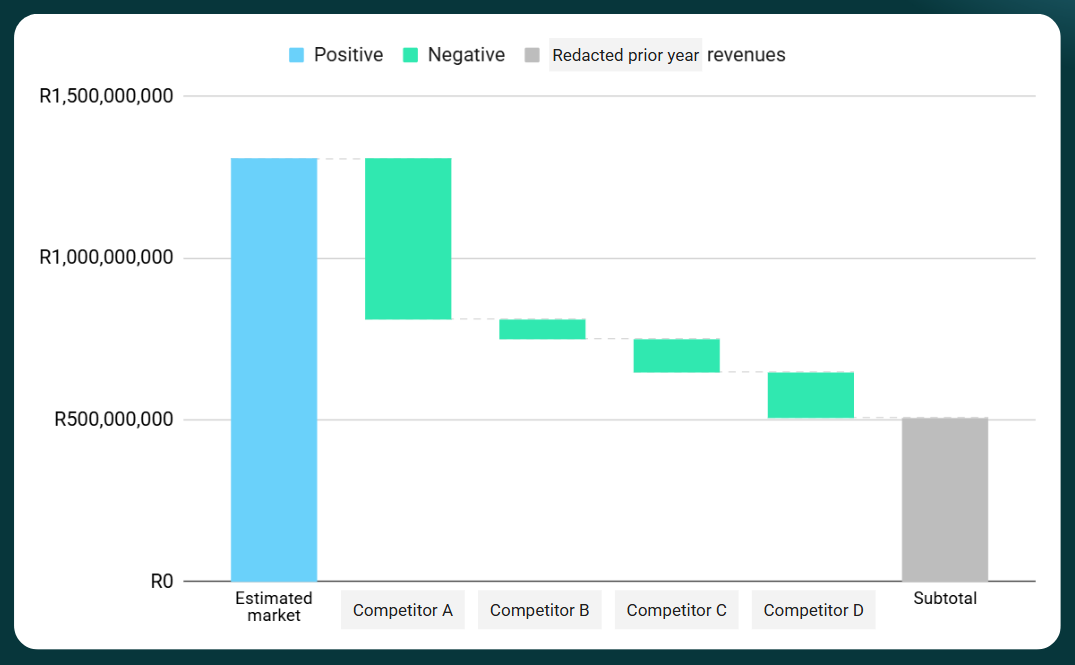
The result of this SA business market analysis? A R1.2 billion p.a. market size, with Acme capturing less than 50% of the selected niche. Of the available prize, the bulk of it was disappearing to overpriced, inferior imports.
Uniquely, this wasn’t a back-of-the-envelope sketch – it was a defensible model that accounted for gearing factors like product mix by office grade, and exposed the impact of recent economic pressures.

Waterfall SA market penetration

Practically, this meant Acme could now forecast with confidence.
For businesses eyeing expansion, the lesson is clear: Data-led sizing turns vague ambitions into budgeted realities, reducing risk by quantifying the “what ifs.”

Peeling back the layers: Insights that changed the game

With the market sized, the real magic happened in the insights. The SA business market analysis was now a catalyst to rethink customer spend triggers – the “why” behind customer purchases. The data revealed that roughly 95% of Acme sales came from refurbs and maintenance, not new developments. This flipped the script: the previous advice focused on chasing developers. The revised strategy was to focus on owners managing existing assets.

The data deepened the realisation that commercial property is not homogenous. Prop owners are categorised into property funds and owner occupiers. In turn, these owners either do property management inhouse, or appoint external businesses. This translates into different spending profiles and triggers, different buying and decision-making processes.

This segmentation exposed a key, flawed belief: Property owners assume “going direct” means importing, unaware that South Africa’s top wholesaler (Acme) offers better value and product locally.

To test this and go deeper into the SA business market analysis, the team conducted a “cake slice” exercise on a mid-sized listed property fund with predominantly A grade office (0.5% of the market, c.250K m² office GLA). Findings? They loved Acme’s product but perceived it as expensive due to intermediary markups – paying almost 50% more than the price direct. Upshot: This one fund overpaid R4 million annually – straight bottom line impact.

From a data perspective, this granular dive highlighted risks to Acme like alienating distributors, and other worries like inferior products being substituted by unscrupulous intermediaries. But it also allowed Acme to understand that their ESG credentials, BEE compliance, local job creation, and carbon savings were additional differentiators in a cost-conscious CRE sector under post-Covid pressure (vacancies at 6%-20% in major metros).

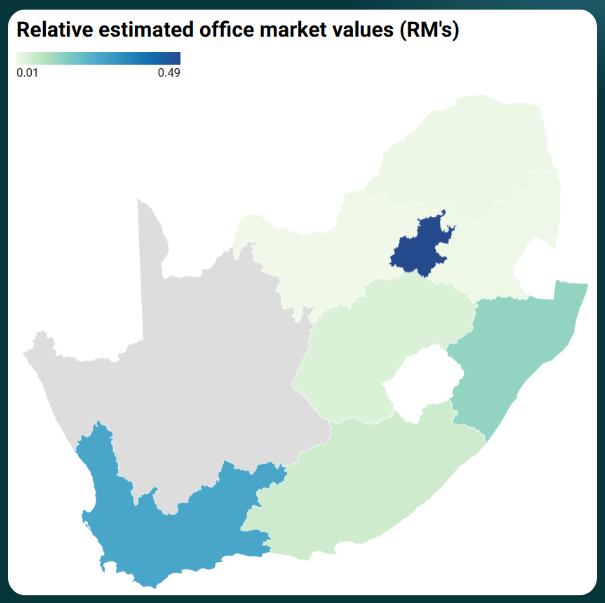
South Africa market segmentation

For B2B leaders, this underscores how data uncovers not just size, but behaviour. Data enables a shift from reactive selling to systematic, proactive targeting, at lowered acquisition costs, because high-CLV segments can be targeted.

Why this time it will be different: from scattergun to sniper rifle

Past failures? Root cause analysis showed a lack of data-driven precision – undefined segments, unaddressed incentives, and no tailored funnels. This SA business market analysis, changed that, delivering the following:

☑️ Market size and nature (for the beachhead property category vertical, by category)
☑️ Market composition (buyer segments – from prop fund to owner-occupier, listed to private, large to small)
☑️ Understanding of buy triggers
☑️ Financial model, with clarity on the leverage or impact of inputs (size, vacancies, wastage, replacement cycles, rebates etc.)
☑️ Unit economics
☑️ Competitor breakdown (down to product mix)

The narrative here is one of empowerment. Acme now knows the market isn’t generic; it’s segmented by portfolio size, geography, and management models – allowing personas to be understood. This enables an account-based marketing (ABM) approach – the best practice for B2B sales. Customer pain points (e.g. overpayment) can be mapped to Acme strengths (speedy stock, diverse range, price) using persona-specific scripts, and integrated with CRM for measurable funnels.

SA industry segmentation

Armed with data, risks can now be confronted head-on: analysis paralysis (time is money – execution delays are leaving a R45 million monthly sales opportunity on the table), intermediary backlash, and imperfect data leading to discincentives (punishing intermediaries) and financial errors (e.g. mispricing rebates and commissions, raw material and factory production estimates etc.).
Mitigation? Start with high-ROI niches, support with content-driven PR (e.g., stories on overpaying for imports or local ESG wins), and educate property owners to pay distributors for actual work performed, without forcing cross-subsidisation on them. This builds awareness, without alienating partners.

The payoff: a roadmap to revenue

Phase 0 confirmed viability – a realistic shot at doubling sales in the office segment.

But this data also enabled clarity in go to market motion. Armed with the market size, executives could evalute routes to market with greater clarity. There is now clarity on the “low hangers”. Powered by SA business market analysis, we have a deeper understanding of these segments, particularly their customre lifetime values (CLV). This enables clearer thinking around customer acquisition and servicing cost ratios. There is an opportunity to close the loop on sales, creating a golden thread running for manufaturer through to end customer.

In the end, this project exemplifies our core value: Using unique CRE data and IP to drive efficiency, cut risks, inform decisions, and unlock profits. For Acme, it’s a competitive edge in a fragmented market. For any business, it’s a reminder – data isn’t a cost; it’s the force multiplier that turns opportunities into reality.

If you’re navigating market expansion, let’s chat about how SA business market analysis can reshape your strategy. What’s your blind spot?

About the author

Related posts

Industry Intel and News
AI Boosts Business: A Joe’s Journey

Over 40 and feeling the AI heat? Is it hype or hope? As a regular SA Joe with pretty good Excel and BA basics, I dove in to AI, tackling a real problem you likely wrestle with every day – moving raw data to useful output. Forget the 6 week old ways “black box”, I built a game-changer in 15 days. Join me as I share the wins, woes, and wisdom of my journey – proof you can too.

Denominator data South Africa
Industry Intel and News
Why Your SA Business is Flying Blind Without Denominator Data

In the fast-paced, hyper-competitive world of South African business, data without context is like scoring 50 marks without knowing it’s out of 200 – a recipe for poor decisions. Enter denominator data: a game-changing approach to geospatial insights that provides the missing “total” for your numbers, turning raw sales values (or risk, calls, etc.) into meaningful intel – steering action.

SA commercial property value
Industry Intel and News
Latest SA commercial property value

This is a key number in South African commercial real estate (CRE). After a lot of hard work, we are able to deliver a firm, defensible value to SA – relevant to businesses (who almost all operate out of CRE), policy makers and the industry itself.

Leave a Reply

Your email address will not be published. Required fields are marked *

Fill out this field
Fill out this field
Please enter a valid email address.
You need to agree with the terms to proceed